
Reviews
Description
Handling and Drift Mechanics
At its core, this game prioritizes a smooth, responsive feel over simulation-style physics. The key to success lies in understanding how speed and angle interact when entering corners. Drifting is not a button press but a natural consequence of carrying the right velocity through a turn. This approach rewards players who develop a feel for each circuit, as maintaining momentum through a series of bends becomes a satisfying challenge. The handling model encourages a flowing, almost rhythmic driving style that distinguishes it from more rigid racing games.
Track Layout and Atmosphere
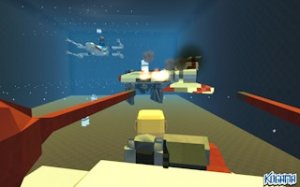
The circuits are set in a stylized city environment, featuring a mix of sharp corners, underground tunnels, and sections with noticeable changes in elevation. These elements create a sense of place and require drivers to adapt their approach from one section to the next. The visual style is characteristic of late-1990s arcade design, with bright neon accents and a clean, futuristic aesthetic. The tracks are designed to be learned through repetition, with each lap offering a chance to refine one's line and shave off precious seconds.
Team Selection and Progression
Before hitting the track, players choose a racing team. This decision influences the pool of vehicles available and the narrative path that unfolds as the championship progresses. Each team offers a distinct set of cars, which vary in attributes like weight, grip, and acceleration. This system adds a layer of strategic choice, as selecting a team that matches one's preferred driving style can make a significant difference. The story component provides context and motivation beyond simply crossing the finish line first.
Strategic Use of Boosts
A boost mechanic adds a tactical layer to the racing. Activating a boost at the wrong moment can upset the car's balance, leading to a loss of control or a crash. Smart use of this resource is essential for overtaking opponents on straight sections or for regaining lost ground after a mistake. Managing boost effectively requires players to read the track ahead and decide when the risk is worth the reward. This system prevents the boost from becoming a simple 'go faster' button and instead integrates it into the broader strategy of each race.







Player Comments
Sign in to comment
You must be logged in before posting a review or rating.
No account? Create one
No comments yet. Be the first to comment!